
Punt casino Plinko
Introduction
Plinko looks almost too simple to deserve a long analysis. You choose a stake, set a risk level, drop a ball, and watch it bounce through a field of pegs until it lands in a payout slot. That is the whole visual premise. Yet in practice, Punt casino Plinko creates a very specific kind of gambling session that feels different from slots, roulette, crash titles, and even most instant win formats.
I have seen many players underestimate this format because the interface is stripped back and the rules are easy to grasp in seconds. The mistake is obvious once you spend real time with it. Plinko is not interesting because it is complex on the surface. It is interesting because a very plain layout hides a sharp balance between probability, pace, and emotional tension. A few settings can completely change the session: low risk can feel almost meditative, while high risk can turn the same board into a sequence of long dry stretches interrupted by occasional outsized hits.
For Canadian players looking at Punt casino Plinko, the key question is not whether the game is easy to understand. It is. The real question is what kind of experience it delivers once money is on the line, and whether that experience suits your style. In this review, I will focus on the game itself: how Plinko works, why it attracts attention, what the risk settings really mean, where the strengths are, and where caution matters.
What Plinko is and why it draws so much attention
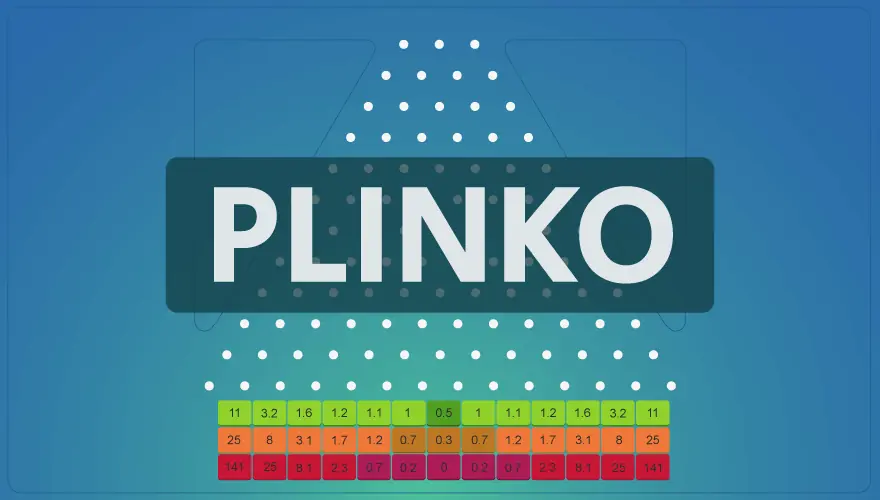
Plinko is a probability-driven casino game built around a falling ball and a grid of pins. The ball drops from the top, collides with pegs on the way down, and eventually lands in a slot at the bottom that carries a multiplier. Your return depends on where the ball finishes. The central areas usually pay less and appear more often. The outer edges tend to hold the largest multipliers, but they are reached far less frequently.
That structure explains why Plinko became so visible across modern gambling platforms. It is immediately readable. A player does not need to learn paylines, card values, side bets, or Punt Casino bonus terms wagering and promo details rounds. The board itself tells the story. Every bounce creates a small moment of suspense, and the result is visible in real time rather than being hidden behind reels or abstract symbols.
There is another reason Plinko stands out. It compresses gambling into a very clean loop: stake, drop, result, repeat. No decorative filler is required. For some players, this feels refreshingly honest. The board does not pretend to be anything else. You are engaging directly with distribution, randomness, and payout spread.
One observation I keep coming back to is this: Plinko often feels more transparent than it really is. You can see the ball moving, so the process appears intuitive, almost physical. But the visual path does not make the outcome predictable. That gap between what looks understandable and what remains statistically elusive is a major part of the game’s appeal.
How the Plinko system works in practical terms
At Punt casino, Plinko generally follows the familiar model used across modern online platforms. Before each drop, the player sets several core parameters. These usually include the bet size, the number of rows, and the risk level. Once the ball is released, it travels through the peg field and lands in one of the bottom pockets, each linked to a multiplier.
The basic logic is simple:
- You choose the stake. This defines the base amount for that drop.
- You select a board setup. Row count and risk level shape the payout distribution.
- The ball falls through the pins. Each contact changes its path left or right.
- The ball lands in a multiplier slot. Your return is the stake multiplied by that value.
What matters is not only the fact that the ball bounces, but how the distribution is designed. On a typical board, the middle slots appear more often because there are more paths leading toward the centre than toward the edges. This is why low multipliers are common and extreme outcomes are rare. The shape resembles a probability curve, even though the player experiences it one drop at a time.
Risk settings are where the session starts to change character. A lower setting usually compresses the range of outcomes. You see more frequent modest returns and fewer dramatic spikes. A higher setting stretches the payout table. The edge multipliers become more attractive, but common landings tend to pay less relative to the stake. In plain terms, the board becomes harsher between big hits.
Rows matter too. More rows usually mean a longer path and a wider distribution of possible endings. This does not guarantee better results. It changes the shape of variance. With a deeper board, the journey feels more eventful, but the practical effect is that the session can become more volatile, especially when combined with aggressive risk settings.
| Setting | What it changes | What it means for the player |
|---|---|---|
| Bet size | Base value of each drop | Directly affects bankroll pressure and session length |
| Risk level | Payout spread across the board | Low risk smooths results; high risk increases droughts and spike potential |
| Rows | Depth of the ball path and range of outcomes | Can make the session feel slower, wider, and more swing-driven |
| Auto-play or repeated drops | Speed of repetition | Raises the importance of bankroll discipline because losses can accumulate quickly |
If you are trying Punt casino Plinko for the first time, this is the practical takeaway: the game is not just “drop a ball and hope.” Your settings define the personality of the session before the first result even arrives.
Why the game feels engaging and how its pace affects decision-making
Plinko has a rhythm that is easy to overlook until you play several rounds in a row. Each drop is short, visual, and self-contained. There is no long spin animation, no waiting for a bonus trigger, and no need to track multiple symbols across paylines. That gives the game a fast pulse. The result arrives quickly, but not instantly, which is important. The ball’s descent creates a few seconds of anticipation without slowing the session down too much.
This pacing is one of the strongest reasons players return to Plinko. It creates a loop that feels active. You are not passively watching reels stop. You are following a visible path. Even though the final outcome is still driven by the underlying random process, the journey to the result feels more tangible.
There is also a psychological effect worth noting. Small returns can appear frequently enough to keep the session moving, especially on lower risk settings, but they do not always represent meaningful profit. A player may feel involved and rewarded while the balance trends downward over time. That is not unique to Plinko, but the speed and visual clarity of the format can make that pattern less obvious in the moment. Before you make a deposit, it is worth reading best Punt Casino withdrawal times page for Canadian players for the fee and speed details.
A second observation stands out here: Plinko can feel calmer than slots while draining a bankroll just as quickly if the player sets the drop speed too high. The interface is cleaner, the action is shorter, and the absence of loud bonus theatrics can create a false sense of control. In reality, repeated low-value outcomes can add up fast.
How risky Plinko really is and who tends to enjoy it
Plinko can be mild or extremely sharp depending on configuration. That is why broad statements about the game often miss the point. Saying that Plinko is “safe” or “volatile” without context tells the player very little. The risk profile depends heavily on the chosen settings.
On low risk, the experience can suit players who want frequent feedback and less severe swings. The payouts are usually flatter, and although large multipliers are less prominent, the session may feel more stable. This does not remove the house edge or guarantee long play, but it often reduces the emotional whiplash.
On medium risk, the board usually becomes more interesting for players who want a balance between regular returns and the occasional stronger hit. For many, this is where Plinko starts to show its real identity. You still get movement in the session, but there is enough spread to keep the outcomes meaningful.
High risk is different. This setting may appeal to players who specifically enjoy chasing outsized returns and are comfortable with repeated low or empty outcomes along the way. Here, Plinko becomes a game of patience, tolerance for long losing stretches, and acceptance that headline multipliers are rare for a reason. It is not a good fit for someone who expects steady reinforcement.
In practical terms, Plinko tends to suit:
- Players who like short rounds and clear visual outcomes.
- Users who want direct control over session style through risk settings.
- People who enjoy probability-based formats more than theme-driven entertainment.
It may be a poor fit for:
- Players who mainly enjoy bonus rounds, story-led slots, or layered features.
- Those who misread frequent small returns as evidence of a low-cost session.
- Anyone who struggles with rapid repetition and impulsive stake changes.
What to understand about odds, distribution, and possible outcomes
Before launching Punt casino Plinko, it helps to think in distributions rather than in isolated drops. A single result tells you almost nothing. The game only makes sense over a series of rounds, because the entire design is built around the probability of landing in common central slots versus rare edge positions. Anyone stuck on account verification can follow the steps laid out in no deposit bonus codes checklist.
The biggest multipliers are usually placed where the fewest paths lead. That is the core trade-off. If a board advertises a large top multiplier, it does not mean the game is generous. It means the payout table includes a rare event that compensates for many ordinary or poor outcomes elsewhere.
Players often focus on the visible maximum and ignore the structure beneath it. In real sessions, most drops cluster around the more common multipliers. That is why bankroll management matters even in a game that looks casual. The board can produce long stretches that feel repetitive, especially on high risk, because statistically that is exactly what the design expects.
Another practical point: randomness in Plinko feels personal very quickly. Because you watch every bounce, near misses can seem meaningful. A ball that drifts close to a high multiplier before falling back to the middle can feel as if something was “almost there.” From a probability perspective, that emotional reading is misleading. The board is not building momentum. Each drop remains a separate event.
| Player expectation | What usually happens in reality |
|---|---|
| High multipliers should appear if I play long enough in one session | Long sessions increase exposure, not certainty; rare outcomes remain rare |
| Seeing the ball path helps me judge the next result | The visible route adds tension, but it does not create predictive value |
| Frequent small returns mean I am doing well | Many modest landings may still leave the overall session negative |
| Changing to high risk simply means bigger opportunities | It also means harsher dead periods and stronger bankroll pressure |
The sensible way to approach Plinko is to treat every setting as a trade-off. Bigger upside usually comes with thinner consistency. A smoother session usually comes with less dramatic potential.
How Plinko differs from slots and other casino game formats
Plinko sits in an unusual place within online gambling. It shares some DNA with instant win games because rounds resolve quickly. It also overlaps with slots in the sense that results are random and payout distributions can vary widely. But the actual feel of the session is distinct.
Compared with classic slots, Plinko is less about layered presentation and more about exposed probability. There are no reels, paylines, scatter symbols, expanding wilds, or free spins information for Punt Casino players driving the experience. You are not waiting for a feature to unlock the real action. The action is already there in each drop.
Compared with roulette, Plinko feels more kinetic. Roulette gives you a single reveal after the wheel stops. Plinko gives you a visible journey. Compared with crash games, it is less about deciding when to cash out and more about accepting a predefined distribution. Compared with Punt Casino blackjack practical player guide, there is no strategic decision tree after the stake is placed.
This difference matters because it shapes player expectations. If someone approaches Plinko hoping for the layered entertainment of a video slot, the game may feel too stripped down. If they want a clean, fast, repeatable format where the randomness is easy to visualize, Plinko can be more satisfying than many decorated alternatives.
One of the most memorable things about Plinko is that it turns pure distribution into spectacle without needing a narrative skin. That is harder to achieve than it looks, and it is a big reason the format has staying power.
Where the game performs well and where its limits show
The strongest quality of Plinko is clarity. The player can understand the basic structure almost immediately. That lowers the barrier to entry and makes it easy to test different session styles. It is also one of the few gambling formats where changing a risk setting has a very visible effect on how the experience feels over time. When the support team feels slow, chicken road guide at Punt Casino for Canadian players explains the fastest ways to reach them.
A second strength is pacing. Rounds are brief, which suits players who dislike long spin cycles or complicated interfaces. Because results arrive quickly, Plinko can be used for short sessions without feeling incomplete. You do not need to wait for a bonus round to justify the time spent.
The game also does a good job of making probability emotionally legible. You can sense the difference between central safety and edge ambition. That makes the board intuitive, even if the exact odds remain under the hood.
Its limitations are just as real. The first is repetition. Once the novelty of the bouncing ball wears off, some players find the loop too narrow. If you need evolving features, theme changes, or strategic choices after the round begins, Plinko may feel one-dimensional.
The second issue is that the simplicity can encourage overconfidence. Because the controls are easy and the board is readable, players may assume they have more influence over outcomes than they actually do. In truth, your control is front-loaded into setup choices. After the drop starts, the result is no longer yours to shape.
The third weak point is session speed. Fast repetition is convenient, but it can also compress losses. This becomes especially relevant when auto-play is available or when a player increases stakes after a poor run in search of a recovery hit.
What to check before starting a Plinko session at Punt casino
If you want to try Punt casino Plinko, a few practical checks can make the experience more controlled and more honest.
- Look at the risk setting before the first drop. Do not treat it as a cosmetic option. It defines the session’s character.
- Keep the stake proportionate to your bankroll. Fast rounds can make even small bets accumulate quickly.
- Pay attention to the payout table, not only the top multiplier. The shape of the board matters more than the headline number.
- Use demo mode if available. It helps you feel the rhythm of different settings without turning every test into a paid lesson.
- Set a stop point in advance. Plinko’s loop is smooth enough that sessions can run longer than intended.
The most important point is simple: decide what kind of session you want before you begin. If you want a steadier flow, configure for that. If you want to chase larger spikes, accept in advance that the path there may be expensive and uneven. Many poor Plinko sessions start not because the game is unclear, but because the player chooses a setup that does not match their tolerance for swings.
Final verdict on Punt casino Plinko
Punt casino Plinko offers a focused gambling format built on visible motion, fast rounds, and adjustable variance. Its strength is not hidden complexity. Its strength is that a very simple board can produce very different experiences depending on how you configure it. Low risk can feel controlled and repetitive in a useful way. High risk can feel tense, sparse, and occasionally explosive.
What the game really offers is direct exposure to probability without the usual slot-machine packaging. That is why some players find it refreshing. It gets to the point quickly, and the result of each drop is easy to follow. At the same time, that same simplicity can become a weakness for players who want deeper features, richer themes, or meaningful decisions after the round starts.
The main caution is straightforward. Plinko may look lighter than many casino games, but its bankroll demands can be serious when speed and aggressive settings combine. The board is easy to read, yet the randomness remains uncompromising. Frequent modest returns do not necessarily mean a healthy session, and rare top multipliers should be treated as exceptions, not expectations.
My overall view is clear. Plinko is worth trying if you enjoy short cycles, visible outcomes, and the ability to shape session style through risk settings. It is less suitable if you want evolving features or if you tend to chase losses in fast formats. In other words, Plinko is not for everyone, but for the right player it delivers something many casino games do not: a clean, high-clarity test of patience, distribution, and discipline.
FAQ
How does Plinko gameplay work on the online casino site?
A ball drops from the top and bounces through a grid of pegs until it lands in a payout slot. Each slot is tied to a multiplier, so the same stake can produce different outcomes based on the final landing.
What affects the multiplier results in Plinko?
The final slot decides the multiplier for that round. The stake amount sets the value of the win, while the ball path randomness determines where the ball lands.
Are there any limits in Plinko, such as table limits or stake caps?
Plinko rounds follow table and stake limits shown in the game interface. These limits can affect the minimum and maximum bet sizes available in the current session.
What happens if the wrong game is launched from the lobby and the gameplay looks different?
Return to the game lobby and select the exact Plinko option again. Different multiplier games may share similar interfaces, so confirming the game title and layout prevents accidental play in another mode.
If access to Punt is blocked through one route, is there a working mirror or backup access?
A working mirror may be available if the main route is temporarily unreachable. If Plinko loads on a different route but payments fail, keep the game session open and contact support for help.
Where can the exact Plinko section be found so the launch is fast?
Go through the casino game lobby, then select Plinko from the available casino games list. If the lobby layout changes on mobile, using the search or categories first can speed up access.